

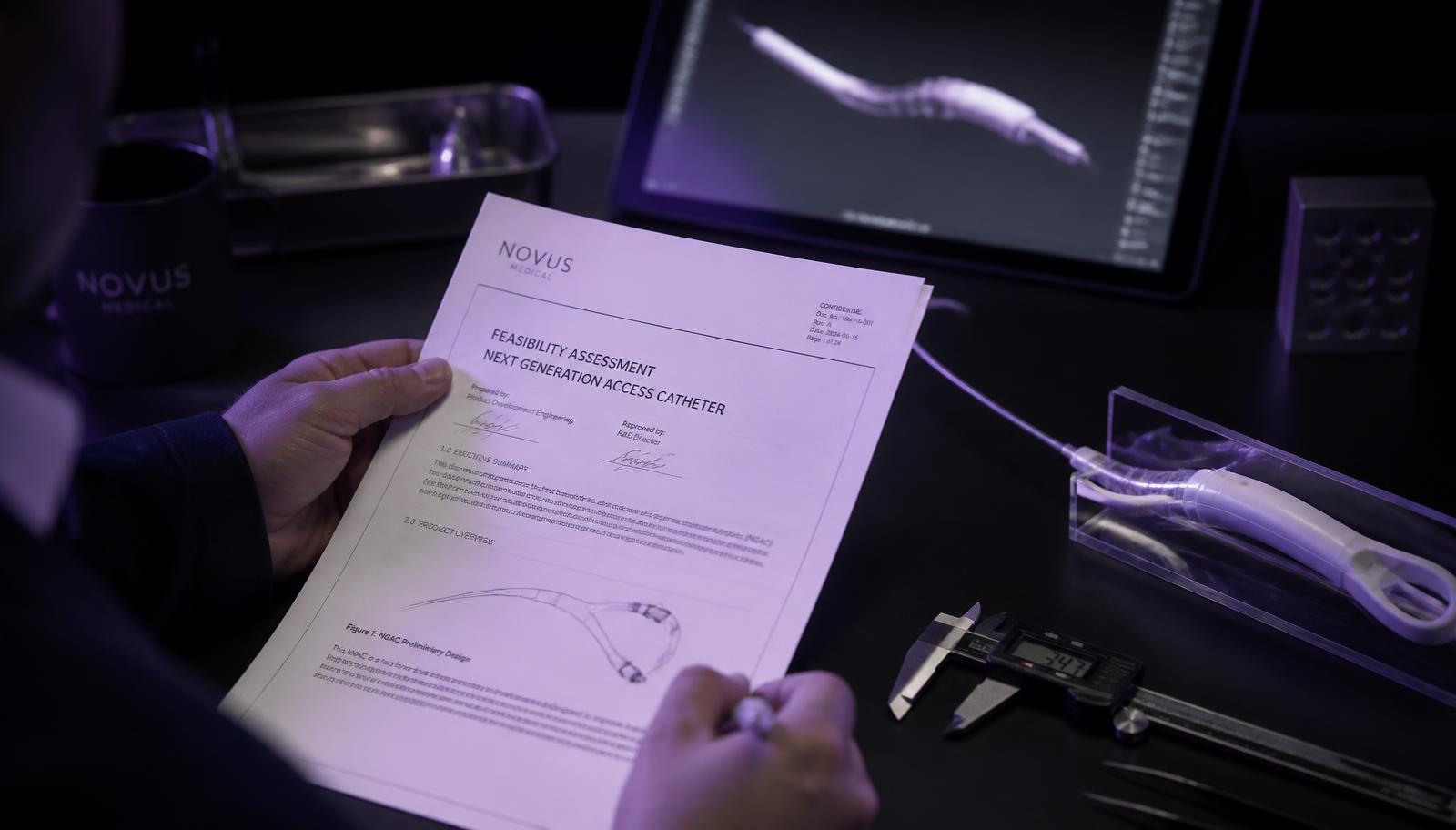
A feasibility assessment is not a formality. It is the first structured opportunity to test whether a clinical idea can become a coherent, testable, manufacturable product.
A useful assessment answers a small number of specific questions. Can the intended clinical function be achieved with available sensing, computing, and power technology? What performance is required, and what performance is realistically attainable? Which parts of the concept are well understood, and which parts carry genuine technical uncertainty?
It should also identify the decisions that constrain everything downstream: form factor, connectivity, data architecture, and where regulated functionality lives in the system. Those decisions are inexpensive to change on paper and expensive to change once development is underway.
The output should be a clear statement of what is feasible, what is uncertain, and what should be resolved before the team commits more capital to development.